What you should know about tire pressure
Tire pressure is the foundation of tire safety and performance. Understanding tire pressure is the foundation of all tire performance. Driving on even one under-inflated tire can increase fuel consumption, reduce grip, and lead to uneven wear, which drastically shortens the tire's life.
Where can I find the recommended pressure for my tires?
You can find the correct tire pressure for your vehicle in two common places:
In your vehicle owner's manual.
On a sticker located on the driver's side door jamb or on the fuel tank door.
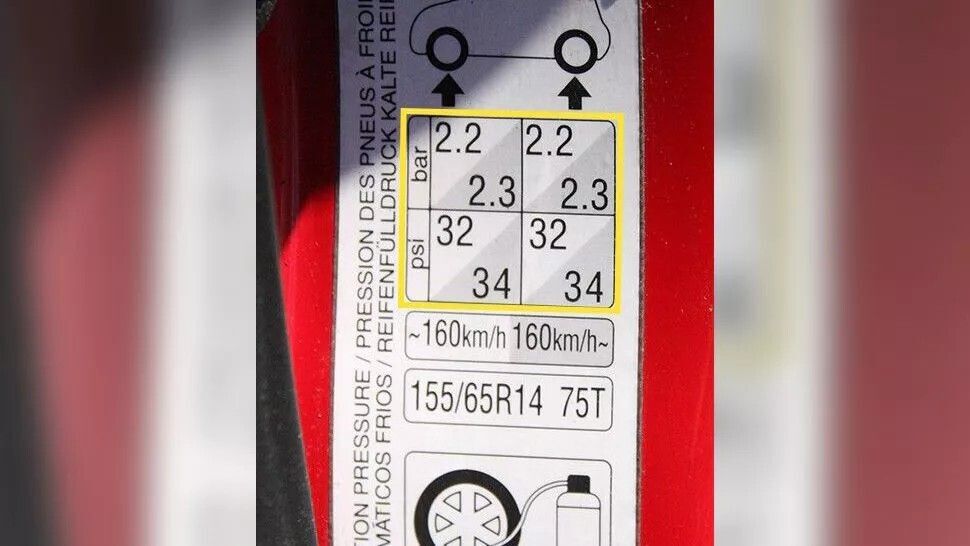
It is a common mistake to use the pressure number moulded into the tire's sidewall. This number indicates the maximum pressure the tire can hold, not the recommended pressure for your specific vehicle.
General guidelines
We recommend checking the pressure of all your tires, including the spare, at least once a month and always before you set out on a long trip.
For the most reliable results, check your tire pressure when the tires are "cold." This means in the morning, before you have driven, or after driving less than 2 kilometers at a low speed. If you must check when tires are hot, add 4-5 psi to the recommended pressure value. Never deflate a hot tire.
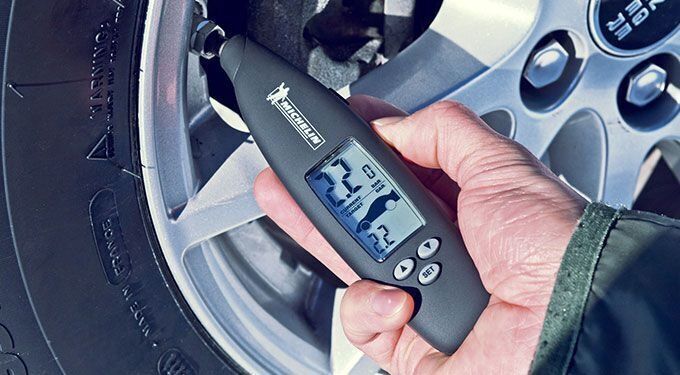
How do I check my tire pressure?
Firmly attach the gauge to the valve stem. It's normal to hear a slight hissing sound as air escapes, and this won't impact the tire pressure.
The gauge will show a number, which is the current PSI.
Compare this number to the recommended PSI for your vehicle. If the number is too high, let air out until it matches. If it's too low, add air until you reach the correct pressure.
A note on pressure gauges
If you use a pressure gauge at a gas station, be aware that it may not be perfectly accurate due to frequent use. We recommend purchasing a high-quality personal gauge and having it checked for accuracy by a tire professional.
Checking your pressure is the fastest and most important tire maintenance task you can perform.

Dealer Locator
Search among our dealers to find where your tire is available
What are the benefits of nitrogen in tires?
You may have heard about filling your tires with nitrogen instead of regular compressed air. But what is the difference?
What is nitrogen?
Nitrogen is simply dry air with the oxygen removed. In fact, the compressed air traditionally used in tires already contains approximately 78% nitrogen.
Nitrogen vs compressed air
The main benefit of nitrogen in tires is that it is less likely to escape through the tire's rubber than oxygen. As a result, your tire pressure should remain stable for slightly longer.
However, it is not a complete solution. Air can still leak from other sources, like the tire/rim interface, the valve, or the wheel itself. Therefore, there is no guarantee of maintained pressure with either air or nitrogen.
If you have nitrogen-filled tires and your pressure is low, you can safely top them up with regular compressed air. Tires manufactured by Michelin are designed to deliver their expected performance whether inflated with air or nitrogen, as long as you respect the pressures recommended by your vehicle manufacturer.
Even if you use nitrogen, you must still check your tire pressure and perform simple tire maintenance checks frequently.
The importance of your tire valve
What is the role of the valve?
It may seem small, but the tire valve is a critical component for maintaining correct tire pressure. Its job is to keep air in and block moisture from getting inside your tire.
The valve cap is also important. It acts as a secondary seal to maintain pressure and blocks dust and dirt from obstructing the valve.
Valves are typically made of rubber, which ages over time and can degrade faster in high heat and humidity in the Philippines. They can also be damaged by high speeds, which can lead to air leaks. For this reason, replacing your tire valve is an often-overlooked part of proper tire maintenance. We recommend you have your valves replaced every time you buy new tires.
How to check if you have enough tire tread
Your tire tread is what gives your vehicle the grip it needs to accelerate, brake, and corner. When the tread grooves become too shallow, the tire cannot effectively evacuate water.
With the frequent heavy rain during the wet season in the Philippines, this poses a high risk of aquaplaning and losing control. Tires like the MICHELIN Primacy SUV+ are specifically designed with advanced tread technologies to improve water evacuation and maintain grip, even in wet conditions. Still, regularly checking your tire tread remains a critical part of your ongoing tire maintenance routine and your overall safety.
Three ways to check your tread depth
Use a tread depth gauge. A gauge is the most accurate tool. Ensure your car is either in park or in gear, and don't forget to engage the handbrake for safety. Check the depth of the main grooves in several places across and around the tire. In the Philippines, the legal minimum tread depth is 1.6mm.
Use the 1-peso test. It’s a common method for a quick estimate. Take a 1-peso coin and place it into one of the main tread grooves. For an old coin(1995–2017), if the tread does not cover the year at the bottom, your tire tread is likely near or below the legal limit, and you should visit a tire professional immediately. For a new coin(2018–present), if the image of Jose Rizal's from his chin down to the tip of the coin is covered, your tire tread is still in good condition. If it’s visible, it’s time to replace your tires. However, do not rely on the peso coin method solely to determine the tread depth. Some tires come with their own tread wear indicators.
Check the tread wear indicators. Tires have small, raised bars moulded into the base of the main grooves. For MICHELIN tires, these are marked by a Michelin Man figure on the sidewall. They are called tread wear indicators. As your tire wears down, the tread becomes level with these bars. When the tread surface is flush with these indicators, your tire is at the 1.6mm legal limit and must be replaced.
A summary of your tire maintenance
Regular tire care and maintenance are important for your safety and comfort on every drive, especially in challenging road and weather conditions in the Philippines.
By regularly checking your tire pressure, inspecting your tire tread, and relying on professionals for tire rotation, alignment, and balancing, you ensure your vehicle performs at its best. Whether you rely on the wet-weather safety of the MICHELIN Primacy SUV+ for your family SUV or enjoy the dynamic handling of the MICHELIN Pilot Sport 5, this maintenance is important to getting their full potential.
If you have any doubts about the condition of your tires, we recommend you visit a certified professional. You can find a Michelin-approved tire dealer near you for an expert inspection.
Related articles
-

Tire rotation: Why and how to rotate your tires?
In simple terms, tire rotation is the process of swapping the positions of a car's tires. The idea is to get the most out of a set of car tires. Regular rotation will extend the life of your tires and improve their performance. It is important to note that not all motorists can rotate their car tires as they wish. Read on to find out more.Learn more -

What to do when the road holding changes?
Road holding, road handling… From time-to-time drivers may notice that their car is not behaving as it used to, even though they have not done anything special. Or at least that's what they think! What should motorists do when they notice poor tire handling while driving? A visit to a professional is necessary to help make the good diagnosis.
Read on to learn more with Michelin.Learn more -
Wheel alignment, wheel balancing: when to do it?
Incorrect wheel alignment or wheel balancing can have consequences for your safety and the life of your tires, resulting in avoidable costs.
In this article we will look in detail at what wheel balancing is and when it should be done. We will also look at the consequences of incorrect wheel alignment and how to fix it.Learn more