Understanding motorbike handlebar vibration
This phenomenon can come from the front or rear of the motorcycle, but you'll feel it most strongly through the handlebars. It typically appears at steady cruising speeds, often between 90 and 130 km/h.
If you feel a high-frequency buzz or vibration in your hands, it's a signal you shouldn't ignore. While it's easy to blame the tires, they usually aren't the direct cause.
Typically, motorbike handlebar vibration is due to an incorrectly balanced wheel. It could also be caused by the tire not being centered properly on the rim after a fitting.
What to do about handlebar vibrations
We strongly recommend taking your motorcycle to a professional. They can identify the exact cause and correct the wheel balance or re-center the tire on the rim. If the problem persists, it could be a sign of other mechanical issues, like worn wheel bearings or chassis components. Taking this step corrects one of the most common causes of these minor motorcycle handling problems.
What is a motorcycle handlebar wobble?
A handlebar wobble is a continuous, sideways oscillation of the fork that you feel at low speeds (generally under 100 km/h). It most often happens when you're slowing down.
You'll feel this movement as the handlebars seem to move from right to left on their own. This often happens when you accelerate and then release the throttle. As the mass of the bike transfers to the front end, it can trigger this wobble. The frequency and strength of the wobble can vary depending on the bike.
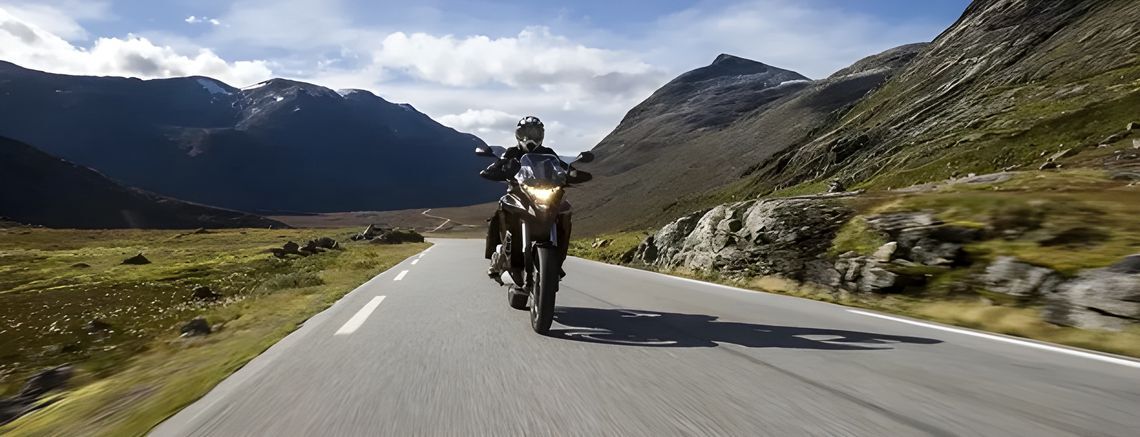
What causes wobble on a motorcycle and how to manage it
Don’t tense up or fight the wobble. Try to hold the handlebars a bit more loosely, and as you reduce speed, the phenomenon should disappear on its own.
What creates handlebar wobble? At the tire level, there are several causes that can contribute to the wobble. The most common causes are a high level of wear and incorrect tire pressure. Issues can stem from worn steering head bearings, a poorly maintained front fork, mismatched front and rear tires, or wheel rim irregularities (especially on spoked wheels).
A worn tire, for example, can lose its original profile, which is critical for stable cornering and low-speed balance.
Selecting a tire renowned for its longevity and performance, especially for the scooters and underbones we use for daily commuting. MICHELIN City Grip 2, for instance, is designed precisely for this kind of stable, reliable urban performance.
It's worth noting that some motorcycle models are simply more sensitive to this than others. To be safe and put an end to the issue, we recommend visiting a professional. Be sure to describe the phenomenon as accurately as you can so they can diagnose these motorcycle handling problems properly.

Dealer Locator
Search among our dealers to find where your tire is available
Understanding motorcycle kickback
Motorcycle kickback is another phenomenon felt at the front of the bike. The handlebars make an extremely sharp, fast right-left movement, similar to a wobble but much more violent.
It’s a sharp sideways movement at the front (the fork moves back and forth). It’s intermittent and very fast, often happening during hard acceleration. But unlike the low-speed handlebar wobble, a kickback is not usually a recurring problem. It is almost always triggered by an external jolt, like hitting an uneven concrete joint or a deep pothole, which are common on many of the Filipino roads. It can also happen when the front tire lifts off the ground while accelerating and lands at an angle.
Again, some motorcycle designs are more sensitive to this than others. Bikes with very sporty geometry or too little weight over the front wheel are more prone to it.
What to do if you experience a kickback
A kickback is sudden and can be frightening. Allow the movement to correct itself. Don't fight the handlebars. Simply decelerate, and the motion will adjust on its own.
Afterward, we recommend consulting a professional to ensure there isn't an underlying defect in the fork or steering components, like improperly adjusted bearings or suspension damping that is set too hard, that could lead to recurring motorcycle handling problems.
Motorcycle weaving
A motorcycle weave is a slow, wavering movement that involves the entire bike, not just the handlebars. It can happen on straight sections or in bends, but it's a high-speed phenomenon, usually starting around 120-140 km/h.
This dangerous issue is essentially a phase shift between the front and rear wheels, which makes the whole bike 'weave' in an “S” shape down the road. You'll feel as though the entire frame is flexing from side to side.
This isn't just a problem for older bikes, as some new models can be sensitive to it, too. It's one of the more serious motorbike handling issues you can face.

How to stop a motorcycle weave
First, don’t accelerate. Don’t brake suddenly, either. Avoid gripping the handlebars in a panic. Hold them more loosely. Gently decelerate, and the phenomenon will reduce until it disappears.
Once you are safely stopped, there are several things to check, as tires can have a major impact on this type of motorbike handling issue.
Tire Pressure: Check that your pressures are correct and adjust if necessary.
Tire Wear: If your tires are too worn or worn unevenly, they should be changed. Heavily worn rear tires paired with new front tires can also be a contributing factor.
Tire Structure: Are your tires approved for your bike? For example, if you have fitted bias tires when radial tires are recommended, this could cause a weave. Always make sure your bike is fitted with tires approved by the manufacturer.
Load: Check your additional load. Luggage, a passenger, or a top case can all change the bike's dynamics and contribute to weaving.
Tire design is a major factor. For example, a commuter bike or backbone using MICHELIN Pilot Street tires is designed for different forces than a high-speed touring bike. Using the wrong type of tire, or one that is heavily worn, can drastically compromise high-speed stability and contribute to these motorbike handling issues.
We highly recommend visiting a professional to rule out other possible mechanical causes for these motorcycle handling problems.
Learn to ride safely
You can receive professional guidance for motorcycle riding tests at specialized training centers throughout the country. These centers offer expert advice and tailored courses designed to improve your riding skills and enhance your safety on the road, including practicing handling maneuvers.
Increase your confidence with MICHELIN tires
Many motorcycle handling problems can be improved or solved with a visit to a professional and a set of high-quality, properly inflated tires. If your tires are worn or unsuited to your bike, it's time for a change.
Whether you need the long-lasting performance of the MICHELIN Pilot Road 4, the all-weather urban confidence of the MICHELIN City Grip 2, or the everyday reliability of the MICHELIN Pilot Street, we have a tire engineered for your ride. Use our dealer locator to find a certified MICHELIN expert near you.