




A 100% Sustainable Recipe...
A recipe not as easy as it looks!
...that's more complicated than it looks!
Team:
Nearly 130,000 employees in 170 countries
More than 6,000 people working on R&D in 350 areas of expertise
Ingredients:
More than 200 components!
Tools:
7 research and development centers worldwide
117 production facilities in 26 countries
10,000 patents covering tire design and manufacture
The ingredients
Today’s MICHELIN tyres are more high-tech than ever, comprising more than 200 components. These perfectly proportioned ingredients interact to deliver balanced performance in terms of safety, comfort and environmental impact reduction.
A wide variety of different families of materials are used to make the components, including natural rubber, synthetic rubber, metal, textiles, reinforcing agents (carbon black, silica, etc.) and plasticizers, (e.g., resins) as well as elements such as sulfur for vulcanization.
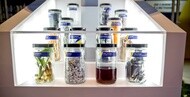
One example among many is the Group’s plan to produce butadiene from biomass (waste wood, rice husks, corn stover, etc.) to replace butadiene derived from petroleum. Butadiene is a key component in the synthetic rubbers used to make tyres. In addition, many other projects are already underway to regenerate plastic (PET), recycle polystyrene or recover carbon black from used tyres.
Michelin has also undertaken to use as little material as possible in its tyres in order to maximize performance and efficiency. The aim is to limit the impact of tyres on the planet’s resources and improve their rolling resistance, thereby lowering CO2 emissions.
To meet Michelin’s goal of producing 100% sustainable tyres, natural rubber – which is still the main material used in tyre manufacturing – must also be produced responsibly. Michelin rapidly committed to making the sector environmentally responsible and beneficial to all stakeholders.
Beyond the many different materials, the excellence of MICHELIN tyres is also down to complex assembly and unique manufacturing processes.
This video directly references the technologies developed with our innovation partners.
In order of appearance:
The Team and their expertise
More than 6,000 people in the Group worldwide – engineers, researchers, chemists and developers – are committed to reaching Michelin’s goal to make its tires 100% sustainable by 2050.
As well as its experience and unique expertise, Michelin is aware that the speed and nature of innovations require a new level of cooperation. With this in mind, the Group has positioned itself as a unifying force among innovative technology partners and trail-blazers, not hesitating to bring teams together from very different realms.

Axens and IFP Energies Nouvelles (BioButterfly project)
Production of butadiene from biomass, such as waste wood, rice husks and corn stover.
Pyrowave
Production of regenerated styrene from waste polystyrene (yogurt pots, food containers, plastic packaging, etc.).
Carbios
Production of regenerated textiles from PET plastic waste (plastic bottles used for water, juice, cooking oils, dishwashing liquid, etc.).
Enviro
Production of carbon black recycled from end-of-life tyres.